The problem with registers and spreadsheets
Fee collection is where small record-keeping errors turn into real money. A receipt book and a spreadsheet can carry a school surprisingly far — until a parent disputes a payment from March, a class teacher is asked mid-lesson who still owes for the term, or the person who "knows the file" goes on leave. Reconciling what was billed against what was actually collected becomes an end-of-term archaeology project.
School fee management software fixes the structural problem: billing and collection records live in one system, attached to the student, visible to exactly the people who should see them, and never dependent on one person's memory or one fragile file.
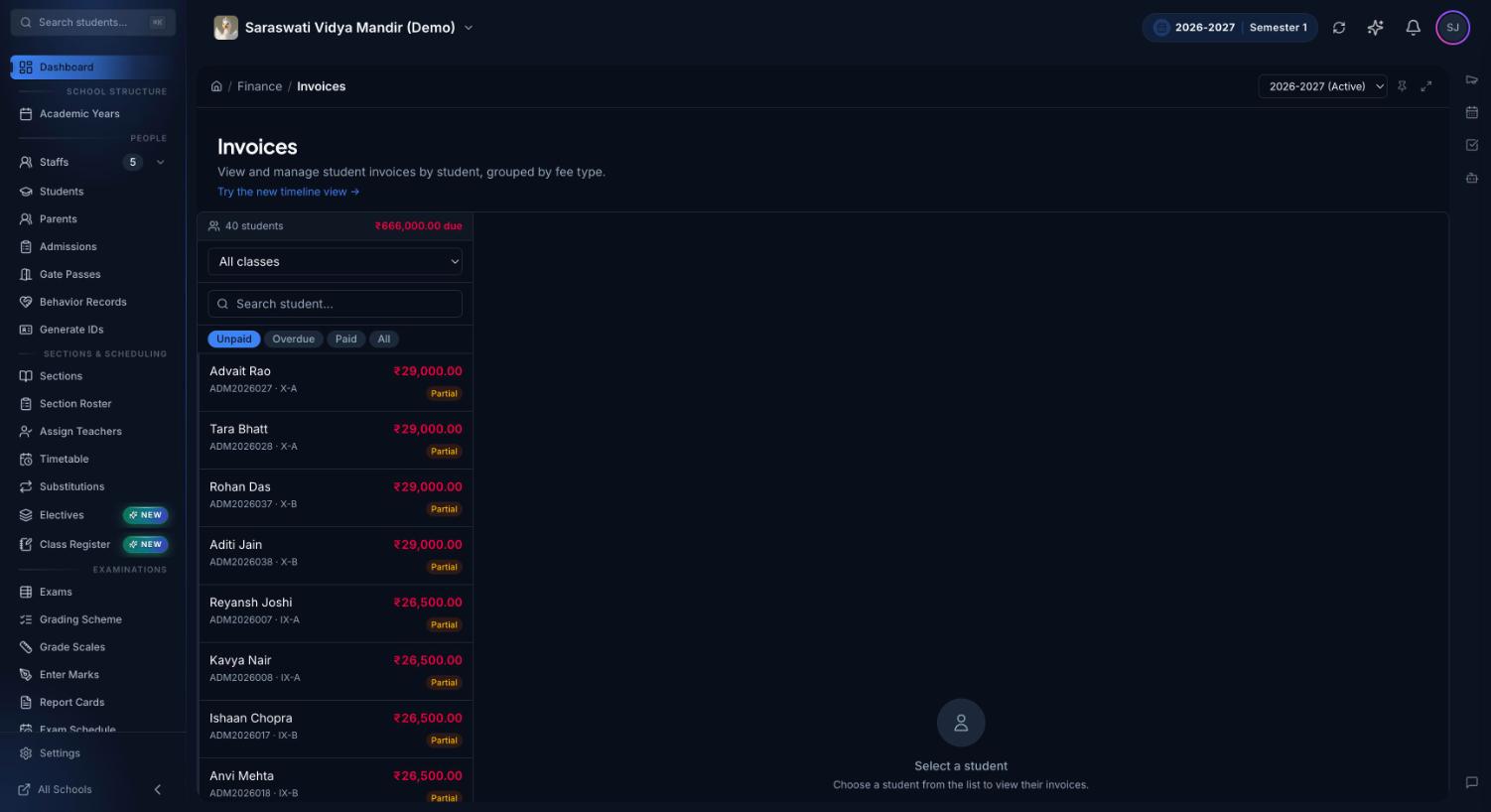
Invoices per student
Bill what each student actually owes, with invoices attached to their record for the academic year.
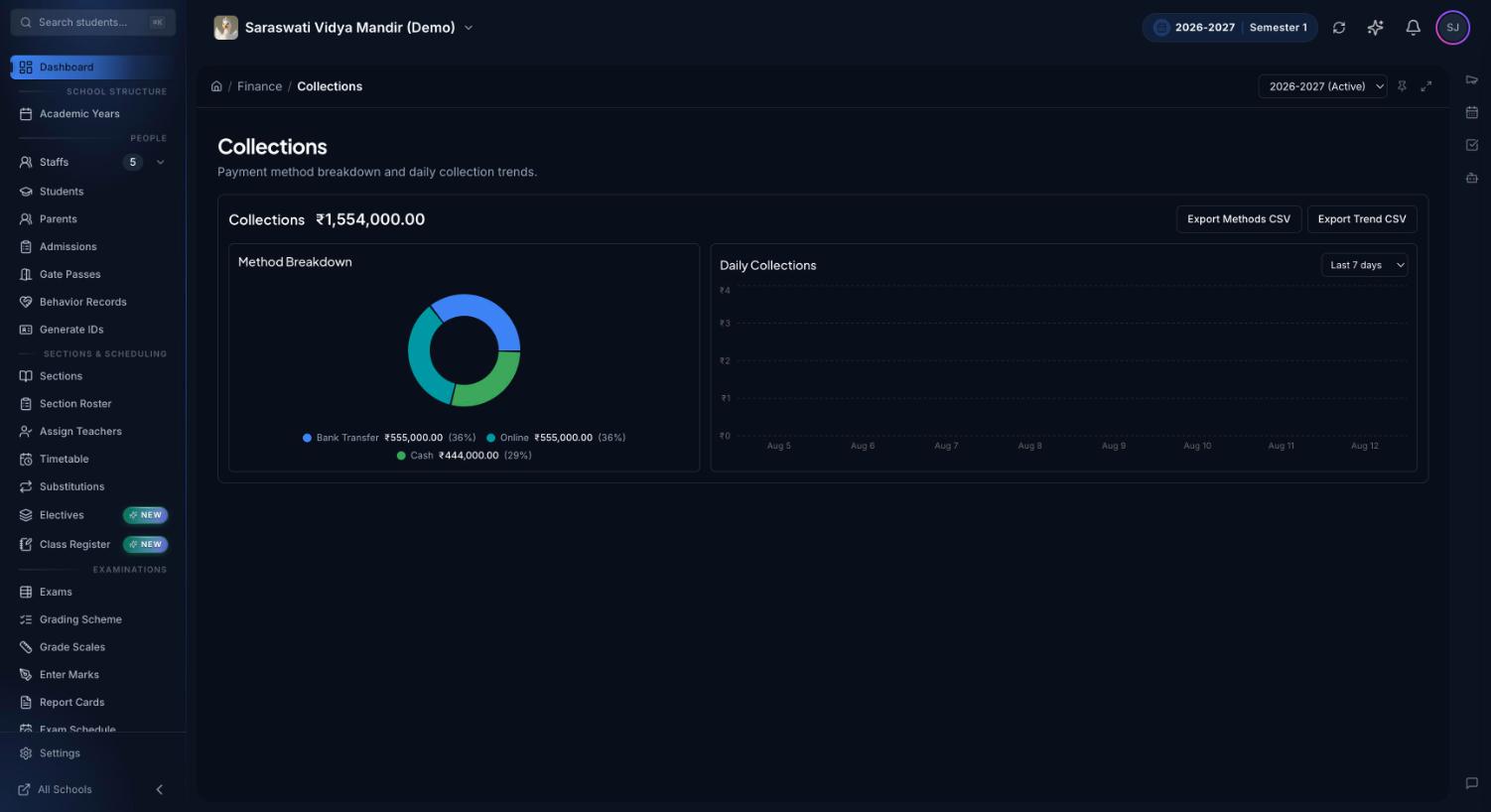
Collections tracking
Record collections as they happen and always know what is paid, partial, or outstanding.
Dashboard visibility
Fee status rolls up into the school dashboard, so leadership sees collection health at a glance.
Parent portal
Parents see invoices and payment history for their children — the same record you see.
Role-based access
Only positions you authorize can touch financial records. Everyone else can't — by design.
Audit-logged changes
Every financial edit is recorded with who, what, and when — history you can defend in any dispute.
Set up a clean fee workflow for the year
The schools that stay on top of collections do the structural work once, at the start of the year, instead of improvising every term:
- Anchor everything to the academic year. Fees, like sections and assessments, belong to a year. Setting up the academic year first means every invoice lands in the right period automatically.
- Bill early and visibly. Raise invoices at the start of the term, while expectations are fresh. Because parents see invoices in their portal, the bill itself does most of the communication.
- Record collections the day they happen. A collection recorded a week later is a dispute waiting to be scheduled. Same-day recording keeps the outstanding-balance view honest.
- Chase from the data, not from memory. Work through the outstanding list on a fixed weekly rhythm. Configurable notifications help make follow-up routine instead of personal.
- Reconcile monthly against the audit trail. The audit trail shows every change to every financial record, which turns reconciliation from detective work into a checklist.
Fee records also don't live alone: they sit on the same student profiles that power admissions and report cards, so a student's financial, academic, and enrollment history stay together from the day they join to the day they graduate.
Honest by default
Premeena doesn't pretend fee management is glamorous. It aims for something better: numbers that are boring because they're correct. No payment-gateway lock-in is required to get value — the core discipline is accurate billing, timely recording, and a record nobody has to argue with. All of it is part of the free core platform.